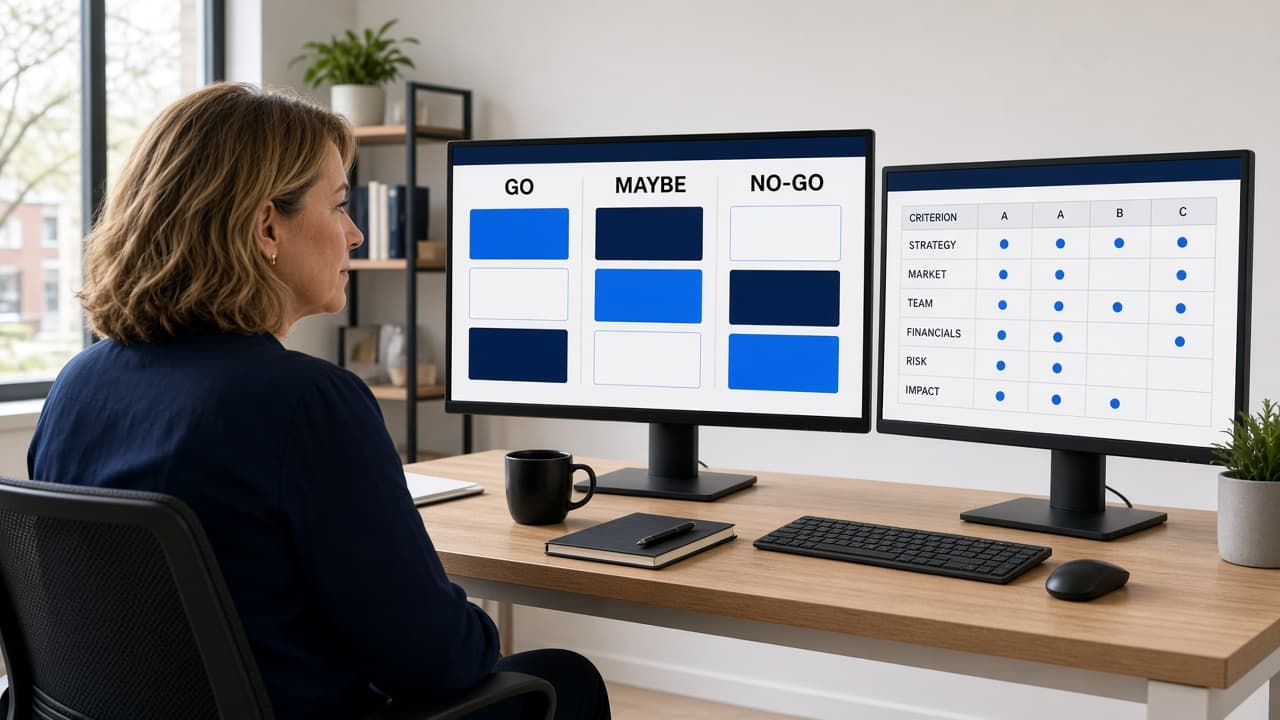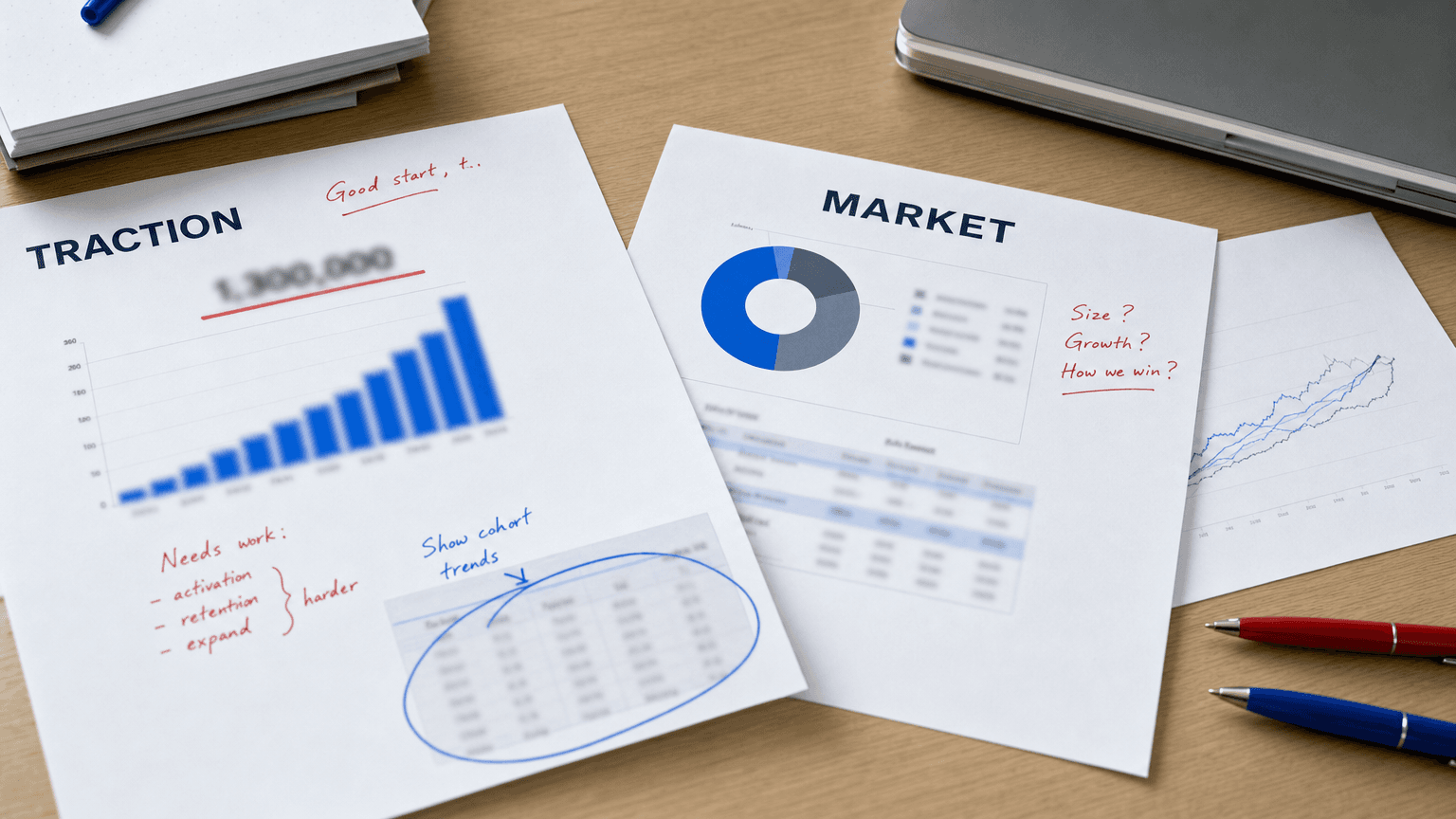


Venture capital firms and angel investors face an overwhelming challenge: too many startups to evaluate, too little time. The average VC receives 1,000+ pitch decks per year but can only invest in 1-2% of them. Traditional due diligence takes 40-80 hours per startup, making it impossible to thoroughly evaluate every opportunity.
Enter AI-powered due diligence—a technology that promises to analyze startups in minutes instead of weeks. But can AI really replace the human judgment that's been the cornerstone of venture investing for decades? This comprehensive guide compares AI due diligence vs. traditional due diligence across every dimension that matters to investors.
40–80h
Traditional DD per deal
2–3 wks
AI-assisted DD
3–5×
More deals reviewed
~80/20
AI / human split
What is Due Diligence in Venture Capital?
Due diligence is the comprehensive investigation a VC or investor performs before investing in a startup. It covers market analysis, team evaluation, financial review, competitive positioning, legal compliance, and technology assessment. The goal is to validate the startup's claims, identify risks, and determine if the opportunity aligns with the investor's thesis and risk tolerance.
Due diligence typically happens in stages:
- Initial screening: Quick review of pitch deck and basic metrics (5-10 minutes)
- First-pass analysis: Deeper dive into market, team, and traction (2-4 hours)
- Deep due diligence: Comprehensive investigation including reference calls, financial audit, legal review (40-80 hours)
- Final diligence: Term sheet negotiation and closing preparation (20-40 hours)
The challenge? Most VCs don't have time to do deep diligence on more than 20-30 startups per year, meaning potentially great opportunities slip through the cracks.
The Traditional Due Diligence Process
Let's first understand what traditional due diligence looks like before comparing it to AI-powered alternatives.
Time Investment
- 40-80 hours per startup for comprehensive due diligence
- 2-4 weeks typical timeline from first meeting to investment decision
- Multiple team members involved: Partner, associate, analyst, domain experts
- Sequential process: Each stage must complete before the next begins
What Traditional Due Diligence Covers
Market Research:
- Market size validation (TAM/SAM/SOM)
- Industry trends and growth projections
- Regulatory environment and barriers to entry
- Customer interviews and surveys
Competitive Analysis:
- Identification of direct and indirect competitors
- Competitive positioning and differentiation
- Barriers to entry and defensibility
- Market share analysis
Team Evaluation:
- Background checks on founders and key team members
- Reference calls with former colleagues and investors
- Assessment of team completeness and gaps
- Evaluation of founder chemistry and commitment
Financial Analysis:
- Revenue and expense validation
- Unit economics and path to profitability
- Cash flow projections and runway
- Cap table review and dilution analysis
Legal Review:
- Corporate structure and compliance
- IP ownership and protection
- Existing contracts and liabilities
- Regulatory compliance
Limitations of Traditional Due Diligence
While thorough, traditional due diligence has significant drawbacks:
- Doesn't scale: Can only evaluate 20-30 startups deeply per year
- Inconsistent evaluation: Different analysts use different criteria and frameworks
- Subjective assessments: Heavy reliance on "gut feel" and personal biases
- Expensive: Analyst time costs $5,000-$20,000 per deep diligence
- Slow: 2-4 weeks means missing fast-moving opportunities
- Opportunity cost: Time spent on bad deals means less time on good ones
How AI Due Diligence Works
AI-powered due diligence uses machine learning, natural language processing, and data aggregation to automate many aspects of startup evaluation.
The AI Due Diligence Process
1. Automated Data Extraction:
- AI parses pitch decks to extract key information (market size, team, traction, etc.)
- Optical character recognition (OCR) reads charts, graphs, and financial tables
- Natural language processing identifies claims, value propositions, and competitive positioning
2. Market Data Aggregation:
- AI pulls real-time market data from multiple sources (Crunchbase, PitchBook, industry reports)
- Search volume analysis validates market demand
- Trend analysis identifies growing vs. declining markets
- Competitive landscape mapping identifies similar companies and funding patterns
3. Scoring and Analysis:
- Standardized scoring frameworks (like NexTraction's Market Validation Index) evaluate startups consistently
- Pattern recognition compares startup to historical successful/failed companies
- Risk assessment identifies red flags and areas requiring human review
- Benchmarking compares metrics to industry standards
4. Report Generation:
- Automated reports summarize findings in investor-friendly format
- Visualizations (charts, graphs, competitive maps) make data digestible
- Recommendations highlight strengths, weaknesses, and areas for deeper investigation
Time Investment for AI Due Diligence
- 15-60 minutes per startup for comprehensive AI analysis
- Instant to same-day results depending on data availability
- Batch processing capability: Analyze 10-100 startups simultaneously
- Parallel processing: All analysis happens simultaneously, not sequentially
What AI Handles Well
AI excels at tasks that are data-driven, pattern-based, and time-consuming for humans:
- Data aggregation: Pulling information from dozens of sources instantly
- Pattern recognition: Identifying similarities to successful/failed startups
- Consistency: Applying the same evaluation criteria to every startup
- Speed: Processing information 100x faster than humans
- Scalability: Analyzing unlimited startups without additional cost
- Bias reduction: Removing unconscious biases based on founder demographics
What Still Needs Human Review
AI has limitations. These aspects of due diligence still require human judgment:
- Founder chemistry and trust: Can you work with this person for 7-10 years?
- Strategic fit: Does this align with our portfolio and thesis?
- Qualitative insights: Nuanced understanding of market dynamics
- Reference calls: Conversations with former colleagues and customers
- Negotiation and terms: Deal structuring and valuation discussions
- Final investment decision: The ultimate go/no-go call
Side-by-Side Comparison: AI vs. Traditional
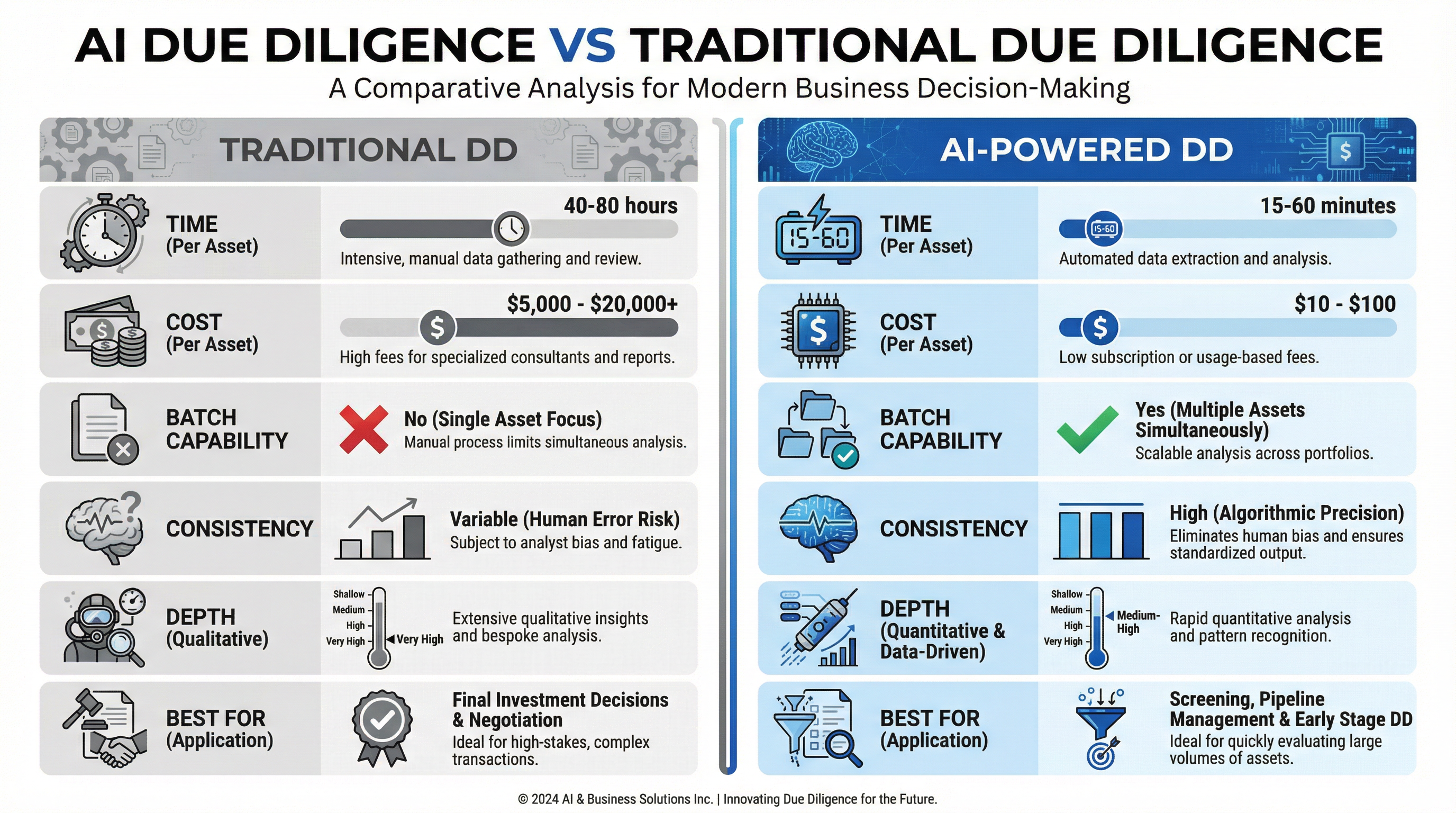
Here's a comprehensive comparison across the factors that matter most to investors:
Time Efficiency
- Traditional: 40-80 hours per startup, 2-4 weeks timeline
- AI-Powered: 15-60 minutes per startup, same-day results
- Winner: AI (100x faster)
Cost Per Analysis
- Traditional: $5,000-$20,000+ (analyst time at $150-250/hour)
- AI-Powered: $10-$100 (subscription or per-analysis fee)
- Winner: AI (100-1000x cheaper)
Batch Processing Capability
- Traditional: No—each startup analyzed sequentially
- AI-Powered: Yes—analyze 10-100 startups simultaneously
- Winner: AI (enables portfolio-wide analysis)
Consistency and Bias
- Traditional: Variable—depends on analyst experience and personal biases
- AI-Powered: High consistency—same framework applied to every startup
- Winner: AI (removes unconscious bias)
Depth of Analysis
- Traditional: Very high—includes qualitative insights, reference calls, deep domain expertise
- AI-Powered: Medium-high—excellent quantitative analysis, limited qualitative depth
- Winner: Traditional (for final investment decisions)
Scalability
- Traditional: Limited—team can only analyze 20-30 startups deeply per year
- AI-Powered: Unlimited—analyze thousands of startups with same resources
- Winner: AI (enables broader deal flow coverage)
Data Accuracy
- Traditional: High—humans can verify and cross-check information
- AI-Powered: High—but dependent on data quality and availability
- Winner: Tie (both have strengths and weaknesses)
When to Use Each Approach
The key insight: AI and traditional due diligence aren't competitors—they're complementary. The best investors use both strategically.
Use AI Due Diligence For:
- Initial deal flow screening: Filter 1,000 pitch decks down to 100 worth reviewing
- Accelerator application review: Evaluate 500+ applications in days, not months
- Batch portfolio analysis: Assess all portfolio companies quarterly for early warning signs
- Quick first-pass evaluation: Decide in minutes if a startup warrants a meeting
- Market validation: Confirm market size, trends, and competitive landscape
- Benchmarking: Compare startup metrics to industry standards
Use Traditional Due Diligence For:
- Final investment decisions: After AI screening, do deep human diligence on finalists
- Lead investor role: When you're leading a round, comprehensive diligence is non-negotiable
- Large check sizes: $1M+ investments warrant 40-80 hours of diligence
- Complex deals: Unusual structures, regulatory issues, or IP concerns need human expertise
- Team assessment: Reference calls and founder meetings can't be automated
- Strategic fit evaluation: Does this align with our portfolio and value-add capabilities?
The Hybrid Approach: Best of Both Worlds
The most sophisticated investors are adopting a hybrid model that leverages AI for efficiency and humans for judgment:
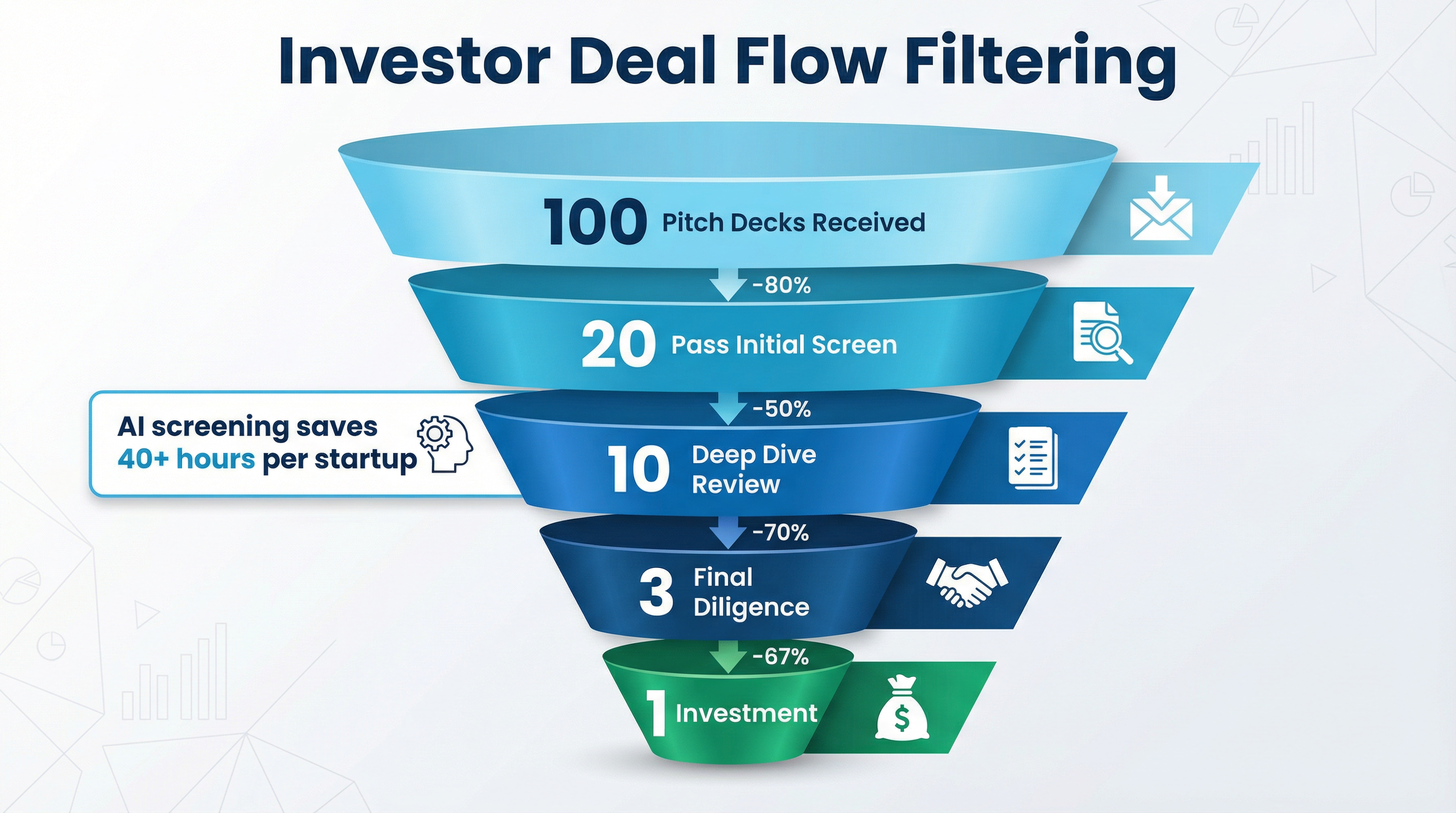
Stage 1: AI Screening (100 → 20 startups)
- Use AI to analyze all incoming pitch decks
- Filter based on objective criteria: market size, traction, team completeness
- Identify red flags: declining markets, weak differentiation, unrealistic projections
- Time saved: 40 hours per startup × 80 startups = 3,200 hours
Stage 2: Light Human Review (20 → 10 startups)
- Partner spends 30-60 minutes reviewing AI reports for top 20 startups
- Takes meetings with founders of most promising opportunities
- Assesses founder quality, strategic fit, and investment thesis alignment
- Time investment: 20 hours total
Stage 3: Deep Traditional DD (10 → 3 finalists)
- Full traditional due diligence on 10 finalists
- Reference calls, customer interviews, financial audit, legal review
- Investment committee presentation and decision
- Time investment: 40 hours × 10 = 400 hours
Stage 4: Final Investment (3 → 1-2 investments)
- Term sheet negotiation and closing
- Final diligence and legal documentation
- Time investment: 40 hours × 3 = 120 hours
For investors
Run every deal through the same 6-category scorecard.
NexTraction's investor workspace gives partners a structured DD memo per deal — comparable across companies, generated in days instead of weeks. The AI does the structured 80%, you keep the judgment for the final 20%.
See the investor workspace →Total time: 540 hours vs. 3,200+ hours with traditional-only approach
The hybrid approach allows investors to:
- Screen 5-10x more startups with same resources
- Reduce time-to-decision from weeks to days
- Apply consistent evaluation criteria across all opportunities
- Focus human expertise where it matters most
- Reduce opportunity cost of missed deals
Tools for AI Due Diligence
Several platforms now offer AI-powered due diligence capabilities:
Comprehensive Platforms
- NexTraction: Batch analysis, Market Validation Index scoring, pitch deck parsing, competitive mapping. Designed for VCs, accelerators, and angel investors. Starting at $500/month for 50 analyses.
Data Platforms
- PitchBook: Comprehensive startup data, funding history, and market intelligence. $30,000+/year.
- CB Insights: Market intelligence, trend analysis, and competitive tracking. $60,000+/year.
- Crunchbase Pro: Startup database and funding tracking. $29-99/month.
Specialized Tools
- Affinity: Relationship intelligence and deal flow management
- Visible.vc: Portfolio monitoring and reporting
- Carta: Cap table management and valuation analysis
FAQ: AI Due Diligence
Can AI replace human due diligence?
No. AI is best for screening and initial analysis, but final investment decisions still require human judgment on team quality, strategic fit, and deal terms. The hybrid approach—AI for screening, humans for final decisions—delivers the best results.
How accurate is AI due diligence?
AI provides consistent, data-driven analysis with accuracy dependent on input quality. For quantitative metrics (market size, growth rates, competitive landscape), AI accuracy is 85-95%. For qualitative assessments (team quality, strategic vision), human judgment remains superior.
What's the ROI of AI due diligence tools?
For a VC analyzing 1,000 pitch decks per year, AI screening can save 2,000-3,000 hours of analyst time (worth $300,000-750,000) while enabling evaluation of 5-10x more opportunities. Typical ROI is 10-50x the subscription cost.
Do AI tools introduce bias?
AI can reduce unconscious human biases (gender, race, age) by focusing on objective metrics. However, AI can perpetuate biases present in training data. The best platforms actively monitor and mitigate algorithmic bias.
How long does AI due diligence take?
Initial analysis: 15-60 minutes per startup. Batch processing: Analyze 10-100 startups simultaneously in 1-2 hours. Report generation: Instant to same-day depending on data availability.
What data do AI due diligence tools need?
Minimum: Pitch deck (PDF or PPTX). Optimal: Pitch deck, financial model, cap table, traction metrics, and website URL. More data enables deeper analysis, but AI can provide valuable insights from just a pitch deck.
Conclusion: The Future is Hybrid
The debate isn't AI vs. traditional due diligence—it's how to combine both for maximum effectiveness. AI excels at speed, scale, and consistency. Humans excel at judgment, relationship assessment, and strategic thinking.
The most successful investors in the next decade will be those who leverage AI to screen broadly and efficiently, then apply human expertise to the most promising opportunities. This hybrid approach enables investors to:
- Evaluate 10x more startups with the same resources
- Make faster decisions without sacrificing quality
- Reduce unconscious bias in screening
- Focus human expertise where it creates the most value
- Identify opportunities competitors miss
Ready to transform your due diligence process? Try NexTraction's AI-powered batch analysis and see how you can screen 100 startups in the time it used to take to analyze one. Start with 50 analyses per month and scale as your deal flow grows.